Case study / Renewal or replacement
Matthews Arena
When does keeping an old building stop being the right capital decision?
An independent study of public sources. Northeastern is an owner studied. No advisory relationship is implied. Sections labeled “My read” are my interpretation, not Northeastern’s account of its internal decisions.
The asset and its setting
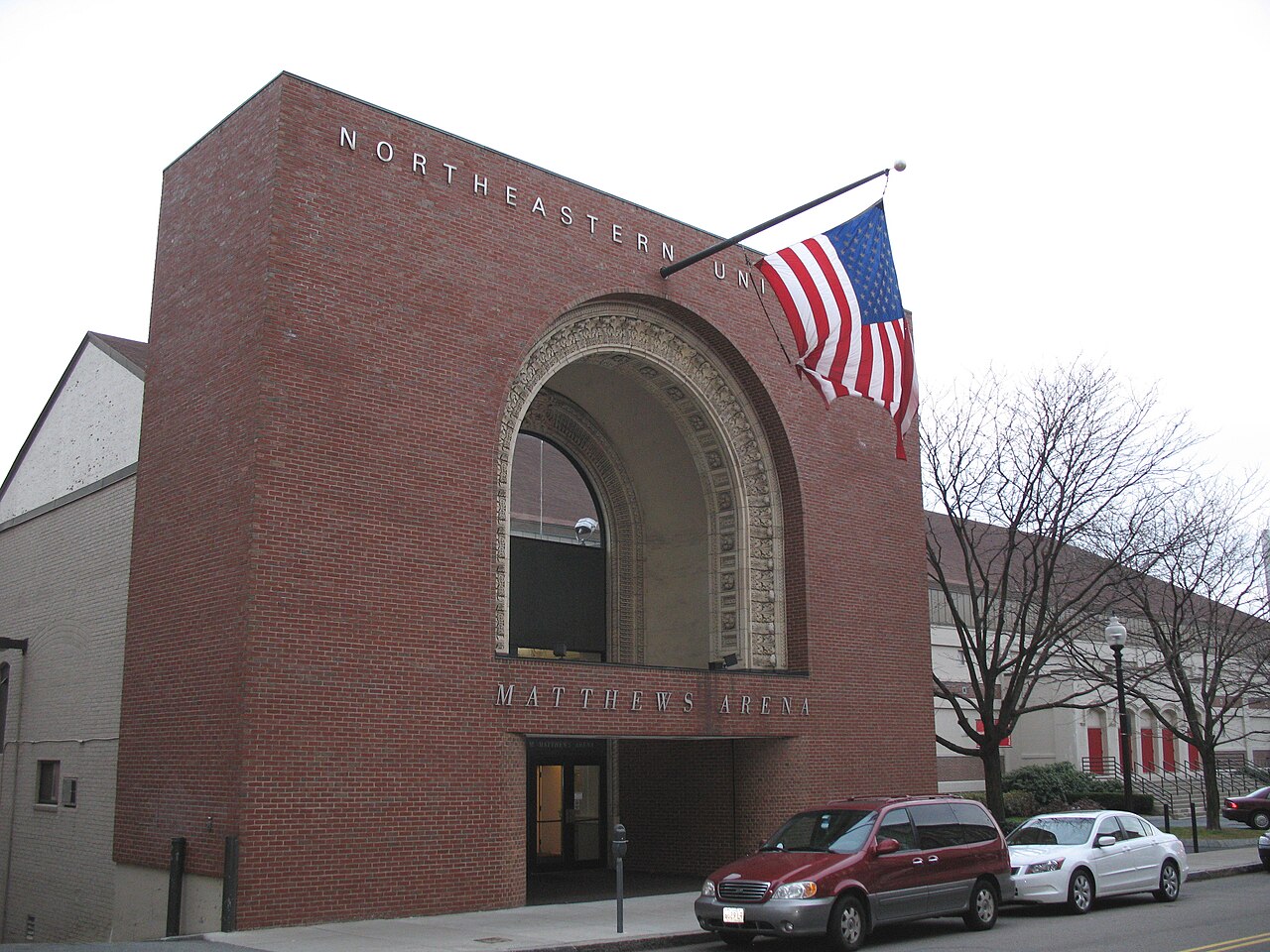
Matthews Arena stood at 238 St. Botolph Street in Boston. It opened in 1910 as Boston Arena. Northeastern bought it in 1979. It was the original home of the Boston Bruins, Boston Celtics, and New England Whalers. Those uses made it part of the city’s sports history before the university owned it. [1]
The building also had a history of repair and change. A fire in 1918 led to rebuilding and a 1921 reopening. A renovation in 2009 cost about $12 million. The opening year is clear in the research. Accounts differ on the exact day, so this study uses the year. [1]
Northeastern’s replacement proposal went beyond a new home for varsity sports. Its March 2025 announcement described a 310,000 square foot complex on the arena site and surface parking. It would serve recreation, training, ceremonies, and community events. The university described a building that could support several activities at once. [5]
My read
I would begin the capital review with those two records. One describes an old building with a long history of use. The other describes what its owner wants the site to do next. The decision needs both. The condition report cannot decide the future program. A new program cannot settle whether the old structure should be retained.
I would ask the owner to define the minimum service it needs. That means stating which activities need space, when they need it, and what can move elsewhere. Then I would compare the existing building with that requirement. A replacement should have a stated purpose before its size becomes the starting point for the budget.
I would also keep the building’s history in the decision memo. People can value an asset for reasons that do not appear in a condition score. That value deserves a clear place in the comparison. It should not stand in for evidence about the structure or become an assumed reason to retain every part of it.
The condition evidence
The arena’s foundations were sinking on reclaimed land. Banker and Tradesman reported in June 2024 that the arena’s wooden piles were settling. Walls were moving vertically and horizontally. Northeastern had installed steel trusses above an annex to shore up the west wall. Project manager Carla Morelli said the work was intended to arrest movement and allow continued safe occupancy. [2]
The public account was not static. In February 2024, athletic director Jim Madigan described the supports as part of maintenance. He said some seating closures were precautionary. That report also said the university was exploring options. It did not present a completed engineering comparison or a final replacement decision. [3]
The Huntington News reported that soil testing in 2024 found asbestos and other toxic chemicals. Its August 2026 report described asbestos-containing material found during excavation. That later finding accompanied a revised opening date. The reports establish a ground condition issue. They do not provide a full environmental survey or a priced remediation scope. [10]
My read
I would separate the evidence into three questions. What was observed? What allowed the building to remain in use? What would support a longer commitment? Settlement and wall movement belong in the first answer. Shoring belongs in the second. A durable repair design, with its limits and useful life, belongs in the third.
I would not treat continued occupancy as proof that the long term problem was solved. I would ask the engineer to explain what the supports were doing. Did they arrest movement, reduce exposure, or buy time for another decision? Those are different outcomes. The capital committee needs the answer in plain language beside the inspection record.
I would also ask for the limits of each conclusion. A press account can identify the issue that drove a project. It cannot replace the underlying structural report. I would want movement records, inspection dates, and the basis for any operating restrictions. Where that evidence is absent from this public study, I leave the conclusion open.
I would ask for one dated condition record that the committee can revisit. It should distinguish observed defects from assumptions and show which findings have changed. That would let the owner see whether the evidence is getting stronger or simply being repeated. If the recommendation changes, the record should identify the new finding behind it. I would not ask a board to infer that change from successive project presentations.
The soil findings would get their own line in my review. I would ask which areas had been tested and what remained unknown. I would ask what the proposed work would disturb. I would then show the possible effects on cost and sequence. I would not convert an incomplete investigation into a precise allowance without explaining its basis.
How the owner made the decision
The public sequence shows a shift from supporting the building to proposing its replacement. In June 2024, Morelli linked the university’s understanding of the structural problem to the need for a new arena. Her account is evidence of the stated rationale. It is not a record of every alternative reviewed by the university. [2]
Northeastern filed a letter of intent in May 2024 for a new multipurpose facility on the site. College Hockey News reported that the university lacked another available site where it could build while keeping Matthews in use. The account described a roughly 290,000 square foot proposal. It did not give a project cost at that stage. [4]
By March 2025, the university’s public case emphasized wider use. The announced complex would hold 4,050 people for hockey and 5,300 for basketball. It would also provide recreation and practice space. The stated justification joined the need to replace the arena with the opportunity to serve more university and community activities. [5]
What repair would have cost
The reviewed sources do not supply a costed option for a comprehensive repair. They do not state the useful life that such a repair would buy. College Hockey News reported an approved replacement cost of $350 million in August 2026. That gives a replacement figure. It does not establish the cost difference between repair and replacement. [9]
This study therefore cannot show that repair was more expensive. It cannot calculate savings from replacement or a payback period. The public record supports the stated structural concern and the broader program. It does not supply the internal business case needed to test the full financial comparison.
My read
I would put at least three choices in front of the committee. Continue limited operation with defined controls. Carry out a durable repair with a stated service life. Replace the building with a stated program. I would also ask whether some activities could move permanently. These are the alternatives I would test, not a claim about Northeastern’s internal shortlist.
For each choice, I would use the same planning period and service requirement. I would include the work itself, operating costs, temporary accommodation, and later renewal. I would show what each estimate excludes. A repair estimate for structural work alone would not answer the same question as a replacement estimate that includes more recreation space.
The repair case would need an engineer’s account of what remains after the work. Which defects are removed? Which remain under observation? What restrictions continue? How long should the repaired building meet the required use? Without those answers, a lower initial price would tell me little about the capital commitment that follows.
The replacement case would need its own discipline. I would ask which parts of the proposed program are necessary and which are additions. I would price those choices separately where possible. Otherwise the failure of the old structure could become a reason to approve any new scope attached to its replacement.
I would keep an option to stop using the building in the comparison as well. That is a question about the service, not just the asset. Could the owner buy access to another venue for the planning period? What would it give up in control, location, or availability? I would not assume that this would be acceptable. I would ask for enough evidence to rule it in or out.
I would treat the previous renovation as history, not a reason to spend again. The question is what the next dollar buys from the date of decision. I would still review the earlier work. It could show which systems remain useful, which assumptions changed, and whether earlier investment affects the available options.
I would test the recommendation by asking what would change it. Would a repair with a longer useful life alter the choice? Would a smaller replacement meet the same need? Would a different program reduce the time without a venue? This is how I would expose the assumptions doing the most work. I would direct the next investigation toward those assumptions before spending more on design.
I would ask the committee to record why the chosen option is preferable even with the uncertainties left in view. The argument might rest on service, capacity, condition, or cost. Each reason needs evidence. If the repair price remains unknown, I would say so. A clear gap is more useful than a claim that the numbers do not support.
The funding and sequence that followed
The $350 million figure is a reported approved replacement cost. The sources reviewed here do not set out a complete funding plan. They do not establish the shares from debt, gifts, or university cash. This study makes no claim about those shares. Approval of a project cost and identification of its funding sources are separate questions. [9]
The final game was on December 13, 2025, against Boston University. Northeastern’s December FAQ set out interim locations. Hockey would use facilities at Boston University, Harvard, Bentley, and UMass Lowell. Basketball would use the Cabot Physical Education Center. Those arrangements were part of the transition away from Matthews. [6]
Demolition was underway in March 2026. Northeastern’s account distinguishes the annex takedown, which began February 25, from disassembly of the arena itself from March 2. Salvage and hazardous materials abatement preceded the main work. Crews dismantled the historic entrance arch for reuse in the new complex. The university described careful disassembly rather than a single collapse. [7]
My read
I would build the cash plan around that sequence. Before assigning annual amounts, I would identify what has to happen before each stage can start. That would include investigations, approvals, temporary venues, salvage, demolition, and new construction. I would ask who owns each dependency and what evidence allows the next stage to proceed.
I would show interim operations as a separate cost line. The services still need a place to run while the site is unavailable. I would ask what the venue agreements cover and how long they last. I would also ask what happens if the construction date moves beyond those agreements.
I would make the funding plan equally explicit. Which money is committed? Which remains conditional? When can it be spent? Who can authorize a change? I would not assume that a published project total answers those questions. The committee should be able to see the source and timing of funds beside the planned spending.
The arch would have a defined scope in my plan. I would ask who records its pieces, who stores them, and who is responsible for reinstalling them. I would include that work in the sequence before demolition starts. A commitment to reuse an element needs a delivery plan if it is to survive changes in staff, design, or schedule.
I would check the effect on the rest of the portfolio. Which other projects rely on the same money or delivery staff? What remains funded if this project needs more? I would want the committee to see the work it is deferring as part of the choice. Without that view, the replacement budget would show the cost of the selected project but leave its effect on other needs unstated.
I would also set the point at which the owner reviews the remaining funds. A site finding should trigger a fresh view of the work ahead. That review should cover cost, timing, and the interim operating plan. I would want those effects presented together so a decision on one does not hide an obligation in another.
Where delivery stands
Northeastern published a photograph on March 19, 2026 showing the last part of the arena above grade being taken down. That documents progress in demolition. It does not establish the completion of below-ground work or the readiness of the site for the replacement building. [8]
The August 25 report moved the expected opening from fall 2028 to spring or summer 2029 after asbestos-containing material was found during construction. That is the latest dated opening forecast established by the sources used in this study. It is a forecast, not a completed milestone. This study does not establish a later cost revision. [10]
My read
I would keep the date of each update beside its claim. The March demolition record and the August opening forecast answer different questions. Neither should be used to imply a current percentage complete. I would ask the delivery team for a dated account of completed work, remaining investigations, and the next constraint on construction.
The revised opening would send me back to the operating plan. I would ask which arrangements need extending and what those extensions cost. I would ask whether the planned opening still fits the academic and athletic calendars. I would then put the answer beside the construction forecast, with any unresolved terms clearly marked.
I would ask for a revised cost forecast as well. A schedule change does not tell me the cost effect on its own. I would want the team to identify committed costs, remaining work, allowances, and unresolved claims. If those figures were still being developed, the report should state the date when the committee will receive them.
I would define readiness for use separately from the end of construction. Before accepting an opening date, I would ask what testing, training, and operating approvals it assumes. I would want named responsibilities for those steps. I would also ask when the owner must commit to an event schedule. That would show how much time remains to change arrangements if readiness falls behind the forecast.
I would judge the response by how clearly it changes the plan. What was learned? What work now has to happen? What decisions are needed? Who makes them? Those questions give the owner a way to act. Repeating the original opening date or the approved budget would not answer them.
Lessons for the owner of an old building
My read
If you manage an old building, start with the service you need it to provide. Write that requirement before choosing a capital project. Then ask what the condition evidence says about meeting it. Keep the physical problem and the desired future use in the same review. Give each a clear basis.
Ask what your interim repairs are buying. A year of continued use may be worth funding. Make the period explicit. State the operating limits, the inspection requirements, and the decision that comes next. Do not leave the next review to the point when another repair request reaches the board.
Set a trigger for reopening the choice. It might be a change in movement, a loss of usable space, or a revised repair estimate. Ask the responsible professional to define the trigger for your building. Record who receives the evidence and who must act. A trigger with no decision owner gives you no useful control.
Compare repair and replacement on the same basis. Ask what service each option provides and for how long. Include the work needed to move people and keep activities running. State the assumptions behind operating and renewal costs. If the scopes differ, explain the difference before comparing the totals.
Keep uncertainty visible in the approval. Show which investigations remain open and which costs depend on their findings. Ask what happens if the estimate or opening date changes. Agree on when the decision returns to the committee. You need a process for responding to new evidence before you need a new approval.
Give preservation commitments the same attention as other work. Name what you intend to retain and why. Assign responsibility for recording, protecting, and reinstalling it. Put its cost and timing in the plan. Then check that the construction documents carry the commitment through to delivery.
Ask for the funding sequence alongside the project total. You need to know what is available now, what depends on a later decision, and what can cover interim operations. Tie that information to the work schedule. Review both when the scope changes. A budget should tell you what you can execute next.
For your next review, bring the inspection record, the options comparison, and the sequence of spending. Ask your team to mark the gaps on those documents. Give each gap a person responsible and a date for an answer. Use the meeting to decide what evidence you need next and what work can proceed now. You do not need to pretend the record is complete to make a bounded decision.
Matthews leaves me with a practical test for your next committee meeting. Can you explain what another repair buys, what replacement adds, and what happens while you wait? If you cannot, commission the missing comparison. If you can, put the choices and their limits on one page. Give your board a decision it can make.